I love making Korean beef bibimbap when I want a colorful, balanced meal that’s full of flavor and texture. It combines seasoned beef, fresh vegetables, and rice all brought together with a rich, savory sauce.
Why You’ll Love This Recipe
I enjoy how this dish offers a perfect mix of textures and flavors in every bite. The warm rice, tender beef, and crisp vegetables create a satisfying balance. I also like how customizable it is, allowing me to use different vegetables or adjust the spice level to my taste.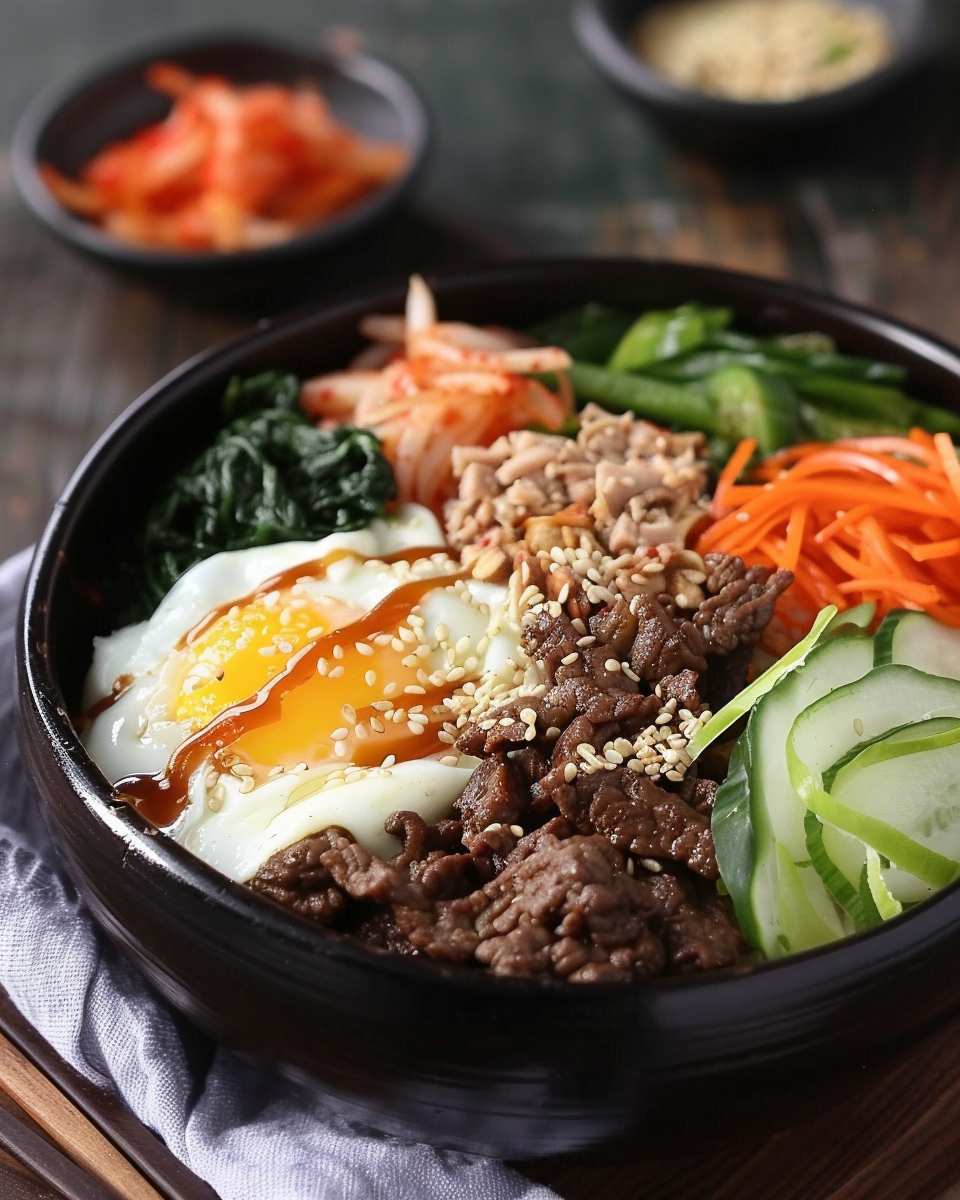
Ingredients
(Here’s a tip: Check out the full list of ingredients and measurements in the recipe card below.)
- Cooked rice
- Ground beef or sliced beef
- Carrots
- Spinach
- Zucchini
- Egg
- Garlic
- Soy sauce
- Sesame oil
- Sugar
- Gochujang (Korean chili paste)
- Sesame seeds
Directions
I start by cooking the rice and setting it aside while I prepare the other ingredients.
I cook the beef in a pan with garlic, soy sauce, sesame oil, and a bit of sugar until it is fully cooked and flavorful.
I sauté or blanch the vegetables like carrots, spinach, and zucchini separately to keep their textures and colors vibrant.
I fry an egg to my preferred doneness.
I assemble the bowl by placing rice at the base, then arranging the beef and vegetables on top.
I add the fried egg in the center and drizzle with gochujang.
I sprinkle sesame seeds on top and mix everything together before eating.
Servings and timing
I usually make this recipe for 2–3 servings.
Prep time: 15 minutes
Cook time: 20 minutes
Total time: about 35 minutes
Variations
I sometimes use chicken or tofu instead of beef for a different protein option. When I want extra crunch, I add cucumber or bean sprouts. I also like adjusting the amount of gochujang depending on how spicy I want it.
storage/reheating
I store the components separately in the refrigerator for up to 3 days. When reheating, I warm the rice and beef, then assemble with fresh vegetables and a freshly cooked egg if possible.
FAQs
Can I use leftover rice?
I often use leftover rice, and it works perfectly.
Is bibimbap spicy?
It can be mildly to moderately spicy depending on how much gochujang I use.
Can I make this vegetarian?
Yes, I replace the beef with tofu or extra vegetables.
What vegetables work best?
I like using a mix of carrots, spinach, zucchini, and bean sprouts.
Do I have to mix everything before eating?
Traditionally, I mix everything together to combine all the flavors.
Conclusion
I find Korean beef bibimbap to be a flavorful and satisfying meal that’s both nutritious and fun to eat. It’s easy to customize and always delivers a perfect balance of taste and texture.

Korean Beef Bibimbap
- Author: Olivia
- Prep Time: 15 minutes
- Cook Time: 20 minutes
- Total Time: 35 minutes
- Yield: 2-3 servings
- Category: Main Course
- Method: Stir-fry
- Cuisine: Korean
- Diet: Halal
Description
A colorful and flavorful Korean beef bibimbap featuring seasoned beef, fresh vegetables, rice, and a savory gochujang sauce, offering a perfect balance of textures and taste.
Ingredients
- 2 cups cooked rice
- 250g ground beef or sliced beef
- 1 medium carrot, julienned
- 1 cup spinach
- 1 small zucchini, sliced
- 2 eggs
- 3 cloves garlic, minced
- 3 tbsp soy sauce
- 2 tbsp sesame oil
- 1 tbsp sugar
- 2 tbsp gochujang (Korean chili paste)
- 1 tbsp sesame seeds
Instructions
- Cook the rice according to package instructions and set aside.
- In a pan, cook the beef with garlic, soy sauce, sesame oil, and sugar until fully cooked and well seasoned.
- Sauté or blanch the carrots, spinach, and zucchini separately to maintain their color and texture.
- Fry the eggs to your preferred doneness.
- Assemble the bowl by placing rice at the base.
- Arrange the cooked beef and vegetables over the rice.
- Place a fried egg in the center.
- Drizzle with gochujang and sprinkle sesame seeds on top.
- Mix everything together before eating.
Notes
- You can substitute beef with chicken, tofu, or other proteins.
- Add cucumber or bean sprouts for extra crunch.
- Adjust gochujang كمية based on desired spice level.
- Use leftover rice for convenience and better texture.
- Store components separately for best freshness.
Nutrition
- Serving Size: 1 bowl
- Calories: 520 kcal
- Sugar: 6 g
- Sodium: 780 mg
- Fat: 18 g
- Saturated Fat: 6 g
- Unsaturated Fat: 10 g
- Trans Fat: 0 g
- Carbohydrates: 55 g
- Fiber: 4 g
- Protein: 28 g
- Cholesterol: 190 mg